

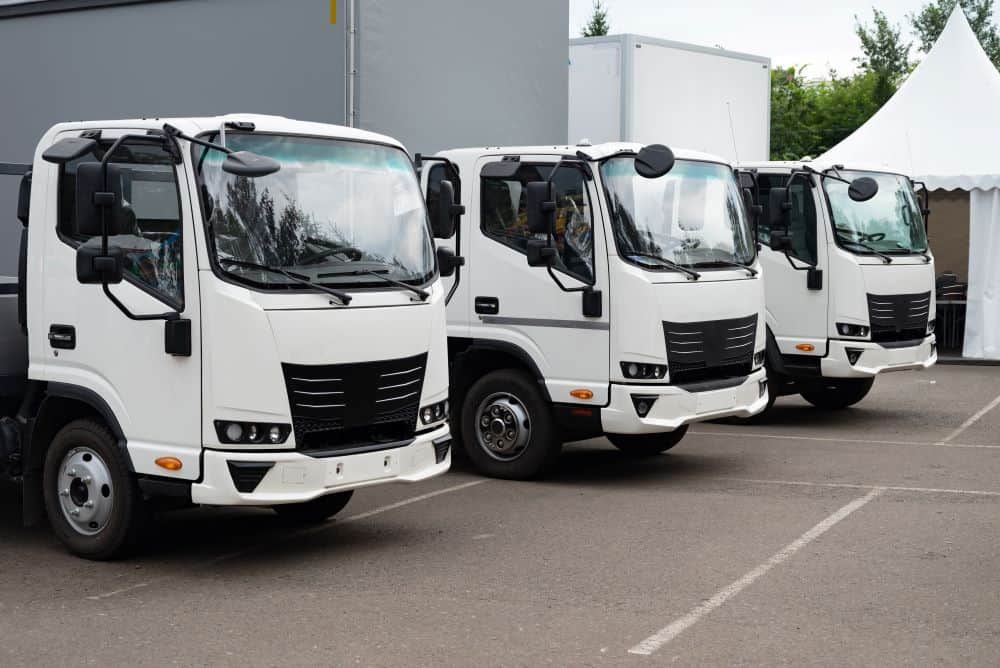
In Thailand’s thriving logistics landscape, where e-commerce surges 20% annually according to the Thailand Board of Investment, efficient deliveries can make or break your business edge. Renting a truck offers flexibility without ownership hassles, but navigating options requires savvy. This guide explores why renting suits Thai operations, legal essentials like licenses and compliance, truck types from pickups to vans, selecting top providers in Bangkok and beyond, the step-by-step process, budgeting tips, safety measures, and efficiency strategies to streamline your routes.
Why Rent a Truck for Business Deliveries in Thailand
Renting trucks for business deliveries in Thailand can reduce logistics costs by up to 40% compared to maintaining an owned fleet, according to a 2022 study conducted by the Thailand Logistics and Supply Chain Federation. This strategy enables enterprises, such as e-commerce companies operating in Bangkok, to manage 20 to 50 daily shipments with greater efficiency.
For instance, the Bangkok-based e-commerce startup ThaiShop increased its daily deliveries from 15 to 45 by leasing pickup trucks from Avis Thailand, resulting in a 25% revenue growth.
This rental approach provides several key advantages:
- Monthly cost savings of THB 5,000 to 10,000 through the elimination of maintenance and insurance expenses;
- Scalability and flexibility to accommodate demand surges during peak periods, such as the Songkran festival;
- Reliability ensured by access to professionally maintained vehicles.
To initiate this process, businesses are encouraged to contact established providers such as Avis or Hertz, where daily rental rates begin at THB 2,000.
Return on investment calculations indicate that a single rental can generate three times the value through expedited deliveries and minimized operational downtime, as substantiated by federation benchmarks. When using flexible, on-demand providers like Deliveree Thailand, businesses can further amplify this ROI by aligning vehicle usage precisely with demand and reducing idle fleet costs.
Legal Requirements for Commercial Truck Rental
Adhering to the legal requirements for commercial truck rental in Thailand is crucial for ensuring full compliance with the Land Transport Act B.E. 2522 (1979). This approach mitigates the risk of substantial fines, which can reach up to THB 50,000 for violations, as outlined by the Department of Land Transport.
Driver’s License and Permits
Foreign drivers intending to rent trucks in Thailand are required to possess an International Driving Permit (IDP) in conjunction with a valid driver’s license from their home country. This permit must be converted to a Thai non-immigrant B visa driver’s license within 90 days, in accordance with the 2023 guidelines issued by the Department of Land Transport.
To achieve full compliance, the following four specific requirements must be met:
- A valid IDP for categories 2-4, which permits the operation of trucks up to 7 tons (for example, light delivery vans).
- A Thai work permit for commercial purposes, obtainable through the Ministry of Labour (application fee of THB 3,100, with processing time of 7-14 days).
- A minimum age of 20 years, accompanied by at least two years of driving experience, as substantiated by records from the home country’s driver’s license.
- Completion of mandatory road safety training, such as the 4-hour courses offered by the Thailand Transport Association Council (TTAC), at a cost of THB 500-1,000.
Common pitfalls include operating a vehicle without an IDP, which may result in fines ranging from THB 500 to 2,000 and potential vehicle impoundment. According to 2023 statistics from the Department of Land Transport (DOT), approximately 15% of rental violations stem from discrepancies in licensing documentation, as reported in official records.
Business Registration and Compliance
Businesses engaged in commercial truck rentals in Thailand are required to register under the Revenue Code as either a juristic person or a sole proprietor. This registration entails obtaining a Tax Identification Number (Tax ID) from the Revenue Department, which enables the claiming of Value Added Tax (VAT) refunds on rental transactions averaging between THB 1,000 and THB 5,000 per month.
To achieve full compliance, adhere to the following three essential steps:
- Register the business with the Department of Business Development (DBD) for a fee of THB 5,500. This process is typically completed within 3 to 5 days through the online portal.
- Secure a commercial vehicle permit from the Department of Land Transport (DOT), which necessitates annual renewal at a cost of THB 1,000.
- Observe the provisions of the VAT Act B.E. 2541 by applying a 7% tax to rental charges and submitting monthly returns via electronic filing.
For example, a logistics firm in Chiang Mai successfully avoided a potential penalty of THB 100,000 by utilizing electronic filing procedures. In contrast, records from the Revenue Department indicate that an unregistered importer in Bangkok was fined THB 200,000 in 2022 for non-compliance.
Types of Trucks Available for Rent
The truck rental market in Thailand provides a diverse range of vehicles, encompassing light-duty pickups such as the Toyota Hilux (with a payload capacity of 1 ton) and extending to heavy goods vehicles like the Isuzu NPR flatbeds (capable of handling up to 5 tons). These options are well-suited to a variety of applications, including urban deliveries in Bangkok and rural transportation in areas such as Chiang Mai, as indicated by 2023 data from SIAM.
Light-Duty Pickup Trucks
Light-duty pickup trucks, such as the Mitsubishi Triton, provide a payload capacity of 1,000 kg and diesel fuel efficiency of 14 km/L, making them well-suited for e-commerce shipping requirements in Bangkok.
Rental options from providers like Thai Rent a Car begin at THB 1,200 per day.
Comparable models, including the Nissan Navara, offer payload capacities ranging from 800 to 1,200 kg and dimensions of approximately 5.3 m x 1.8 m, rendering them highly effective for urban retail transportation.
Essential features encompass automatic transmissions, air conditioning, and integrated GPS systems to facilitate precise navigation.
In rural areas like Chiang Mai, these vehicles are extensively employed for agricultural freight, enabling the transport of produce while adhering to regulatory road limits.
Advantages include superior maneuverability, which, according to a 2022 logistics study, reduces operational downtime by 30% in congested traffic conditions, as well as commendable fuel efficiency for routine operations.
Limitations involve their unsuitability for loads exceeding one ton, which may incur fines for overloading violations.
Per data from the Federation of Thai Industries, pickup trucks constitute 60% of rental vehicles in Thailand, attributable to their adaptability across the country’s varied terrains.
Medium-Duty Delivery Vans
Medium-duty delivery vans, such as the Toyota HiAce, offer a 1,500 kg payload capacity within an enclosed cargo space, making them ideal for refrigerated transport of perishable goods in Phuket-based businesses. These vehicles are available for rental at THB 2,000 per day through Hertz Thailand.
To optimize fleet operations, businesses may consider the following subtypes:
- standard vans, exemplified by the Mercedes Sprinter (1-2 tons payload, 10 m volume), suitable for general cargo;
- refrigerated variants, such as the Isuzu NPR equipped with -18 degreesC cooling capabilities, designed for agricultural freight;
- and flatbed models like the Hino Dutro (2.5 tons payload), appropriate for construction materials haulage.
These vehicles typically achieve fuel efficiency of 10-12 km per liter and are equipped with essential safety features, including anti-lock braking systems (ABS).
For example, an export-import firm in Laem Chabang employs HiAce vans to conduct 50 weekly door-to-door services, resulting in a 25% reduction in spoilage rates.
For environmentally conscious options, electric vans such as the BYD T3 are available at THB 3,000 per day, providing a range of 300 km.
Finding and Selecting Rental Companies
When selecting a rental company in Thailand, it is essential to evaluate the fleets offered by established providers such as Budget Car Rental and local firms like Siam Truck Rent. These entities collectively account for over 70% of business deliveries, according to data from the 2023 Thai Rental Association.
Evaluating Providers in Major Cities
In Bangkok, rental providers such as Avis deliver comprehensive 24-hour customer support and fleets equipped with GPS technology, tailored for efficient urban logistics operations. In contrast, in Chiang Mai, Thai Rent a Car focuses on rural delivery services, offering eco-friendly diesel trucks starting at THB 1,500 per day.
In Bangkok, Avis maintains an extensive inventory of over 200 trucks, available at THB 2,000 per day and earning a 4.5 rating on Google, while Budget provides unlimited mileage options alongside corporate discounts to accommodate high-volume requirements.
In Chiang Mai, Siam Rent a Car specializes in agricultural applications, featuring trucks with tail lifts at THB 1,800 per day, complemented by local partners who provide English-speaking personnel for streamlined coordination. For operations in Phuket, Hertz addresses tourist routes with refrigerated units and real-time tracking capabilities, priced at THB 2,500 per day.
Recommendation: It is advisable to confirm all pricing inclusive of VAT and explore loyalty programs, such as 10% discounts for business clients, to maximize cost efficiency. According to a 2023 survey by the Thailand Tourism Authority, Hertz achieved the highest reliability rating of 92% for on-time deliveries.
The Rental Process Step-by-Step
The process for renting a truck in Thailand generally requires 30 to 60 minutes when conducted online through platforms such as RentCarThailand.com. This procedure begins with vehicle selection and concludes with the handover of the vehicle, while ensuring full compliance with Department of Transportation (DOT) regulations.
To ensure a seamless experience, follow these structured steps:
- 1) Conduct research and complete the booking online through applications such as Klook or directly via company websites; select the rental duration for the truck, with daily rates ranging from THB 1,500 to 4,000 based on vehicle size (for example, a 6-meter pickup truck at THB 2,500 per day).
- 2) Submit the required documents, including an International Driving Permit (IDP), business Tax ID, and a 20% deposit (approximately THB 5,000, payable by credit card or bank transfer).
- 3) Review and sign the rental contract, verifying mileage limits (200-300 kilometers per day) and the 24-hour cancellation policy.
- 4) During pickup and inspection, verify that the fuel tank is full, examine the tie-downs and GPS system; this process typically takes 20-30 minutes.
- 5) For return, adhere to the full-to-full fuel policy; a cleaning fee of THB 500 will apply if the vehicle is returned in a dirty condition.
The total time required for offline procedures is 1 to 2 hours. It is essential to include insurance add-ons to mitigate potential liability of up to THB 10,000, in accordance with the guidelines of the Thai Road Transport Act.
Cost Factors and Budgeting Tips
Truck rental costs in Thailand typically range from THB 1,200 to THB 5,000 per day, varying based on vehicle type and rental duration. Weekly leases often provide discounts of 20-30%, such as THB 8,000 per week for a pickup truck, according to 2023 pricing data from the Thai Rental Association.
Key factors influencing these costs include:
- Vehicle type, for example, pickup trucks at THB 1,500 per day compared to heavy goods vehicles (HGVs) at THB 4,000 per day;
- Rental duration, such as monthly plans priced at THB 50,000 with unlimited kilometers;
- Additional services, including GPS navigation at THB 200 per day or comprehensive insurance at THB 500 per term;
- Location and seasonal variations, where peak season in Phuket may incur a 15% surcharge, and holiday deliveries can increase costs by 20%.
To manage budgeting effectively, businesses should negotiate corporate accounts to secure 15% discounts and utilize expense-tracking applications such as Expense Manager.
For retail transport operations, opting for rentals can deliver a strong return on investment by saving approximately THB 20,000 per month compared to purchasing vehicles, when accounting for depreciation, as reported in 2023 data from the Thai Trucking Association.
Insurance, Maintenance, and Safety
Standard truck rentals in Thailand typically include basic third-party liability insurance coverage up to THB 1 million, as required under the Motor Insurance Act B.E. 2535. However, it is strongly recommended to obtain comprehensive coverage, which costs between THB 300 and THB 800 per day, to protect against theft and accidents. This additional insurance can reduce out-of-pocket expenses by up to 80%.
The basic insurance provided is complimentary but extends only to damages inflicted on third parties. For more robust protection, renters are advised to add comprehensive policies, such as those offered by Allianz Thailand, which encompass collision damage and theft coverage.
Rental agreements often incorporate maintenance benefits, including daily vehicle inspections and round-the-clock roadside assistance provided through AA Thailand. This service covers towing expenses up to THB 1,000.
Safety features on rental trucks generally include airbags, load-securing tie-downs, and integrated ramps, all of which are crucial for adhering to Thai traffic regulations, such as the 80 km/h speed limit on highways.
In a 2022 incident in Bangkok, comprehensive insurance enabled a renter to avoid a THB 500,000 repair bill, underscoring the value of enhanced coverage.
According to World Health Organization data, Thailand records 20.5 road fatalities per 100,000 vehicles, highlighting the importance of prudent driving practices.
Optimizing Deliveries for Efficiency
Optimizing truck deliveries in Thailand can reduce fuel costs by 25% through the integration of GPS tools, such as Google Maps, with rental fleets. This approach enables same-day routes in Bangkok capable of handling 30-40% more cargo, as reported in the 2023 Kasikorn Research Center logistics study.
To realize these benefits, adhere to the following five best practices:
- Route Planning: Utilize Waze or Garmin GPS systems to optimize routes, achieving 15-20% time savings on toll-intensive paths such as Highway 4 by avoiding areas prone to congestion.
- Load Optimization: Restrict payloads to 80% of capacity to enhance fuel efficiency; secure loads with ratchet tie-downs to minimize shifts and reduce vehicle wear by 10-15%, in accordance with Thai Trucking Association guidelines.
- Off-Peak Scheduling: Schedule deliveries outside peak hours of 7-9 a.m. in Bangkok, which can increase speeds by 30%, based on 2022 data from the Traffic Police.
- Hybrid Rentals: Select electric vehicle models, such as BYD trucks, for environmentally focused routes, resulting in 20% cost reductions through lower fuel and maintenance expenses, supported by Ministry of Energy incentives.
- Real-Time Tracking: Deploy applications like Fleetio for continuous monitoring, which can reduce delays by 40% via predictive alerts.
A wholesaler in Chiang Mai implemented these practices, increasing daily deliveries from 18 to 25 and enhancing overall efficiency by 35%, in line with the Kasikorn Research Center’s findings.


